What We Believe
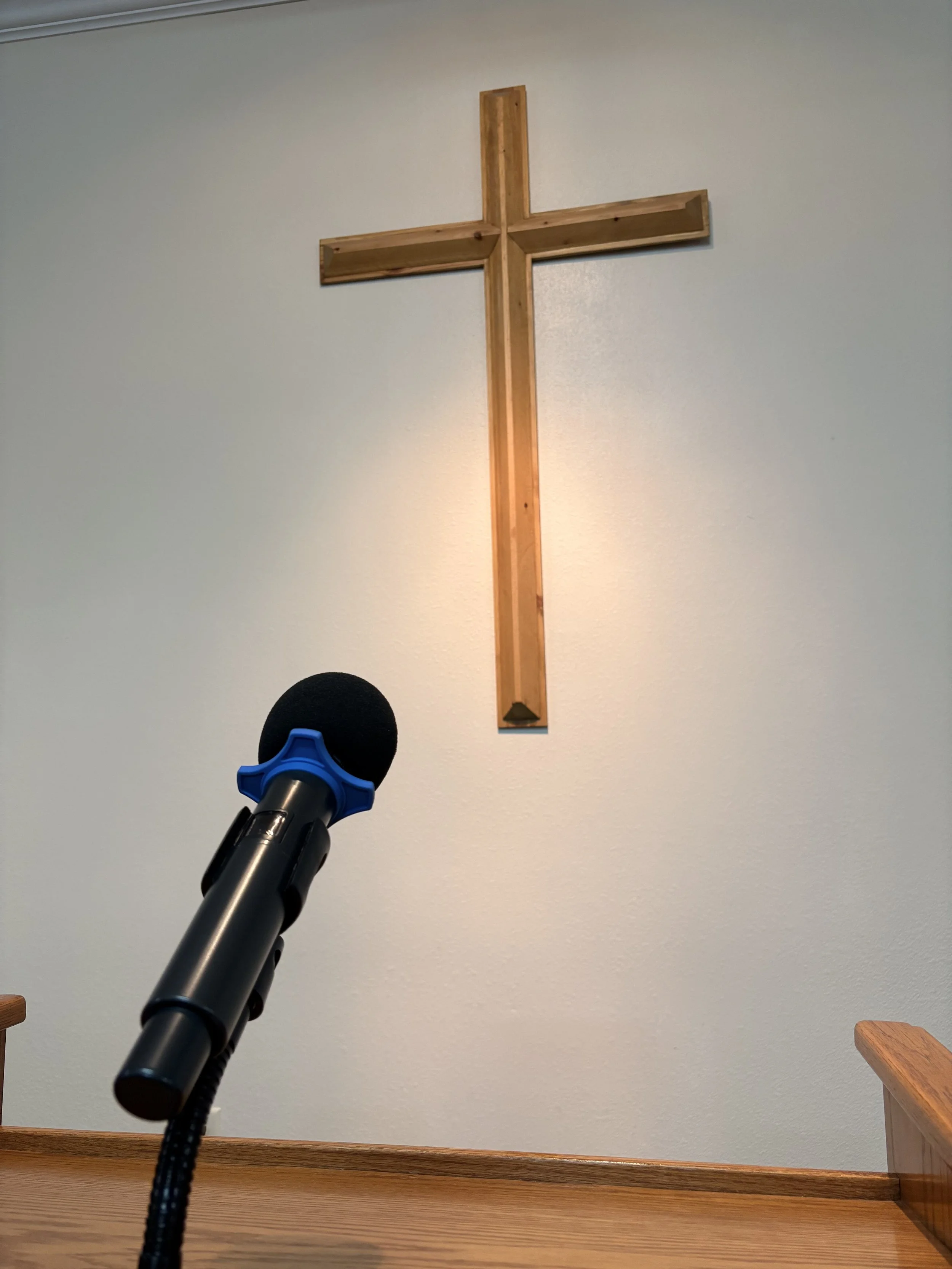
Our faith is guided by simple but powerful commitments:
The Bible is our map - 2 Tim. 3:16
Prayer is our moto - Luke 18:1
Love is our motive - 1 Cor 16:14
The Gospel is our message - Mark 16:15
Holiness is our method - 1 Peter 1:16
Grace is our means - 1 Cor 15:10
Jesus Christ is our model - 1 John 2:6
These values shape not only what we preach, but how we live, serve, worship, and care for one another.

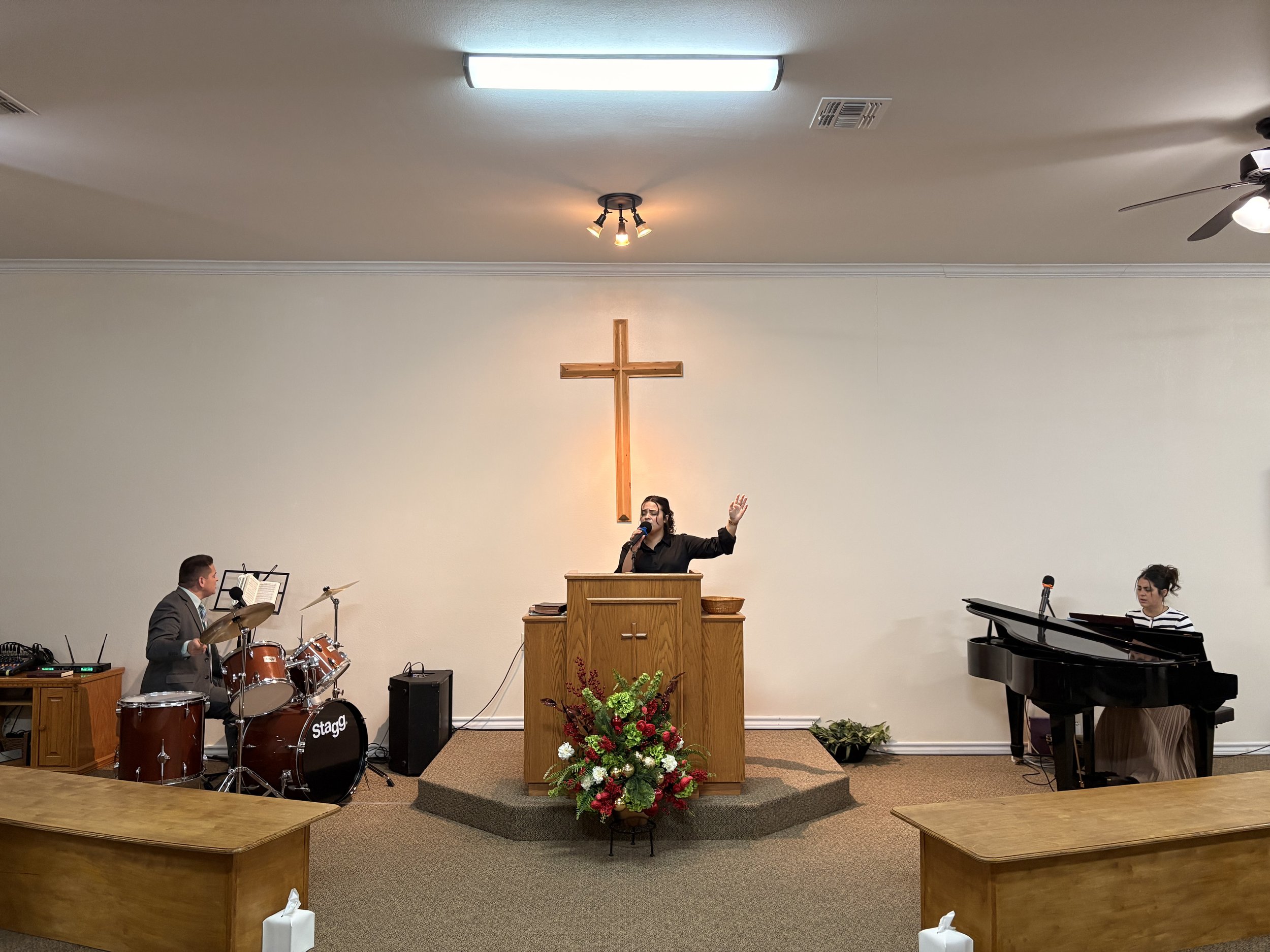
Our Mission
Our mission is to openly share the love of God so that people may experience:
Personal deliverance
True holiness
Abundant life through Jesus Christ
We desire to be a house of prayer for all people — a place where individuals can draw near to God, hear His voice, grow in faith, and walk in obedience to His truth.
Why “Holiness” Tabernacle?
The word holiness in our name reflects our mission and calling. In Scripture, holiness means to be set apart by God for His purpose. We believe holiness matters deeply to God and should be the expectation of the Christian life — not as a legal burden, but as the fruit of a life surrendered to Christ.
The word tabernacle reminds us that God’s dwelling place is not made by human hands. In the Bible, the tabernacle was the place where God chose to meet with His people. Today, we believe God still desires to dwell among His people through His Spirit. Our prayer is that Holiness Tabernacle would always be a place where God’s presence is welcomed, honored, and experienced.
-
We are a Christian church, holding to the faith centered on Jesus Christ as revealed in Scripture. We believe in Jesus Christ — crucified, risen, and coming again — and in salvation by grace through faith.
Jude 1:3, John 14:6
-
We are functionally a non-denominational Christian congregation. To be non-denominational means that we are an independently governed congregation. We are legally locally governed and are not dependent upon any organization or denomination to exist.
Acts 2:38-39, Acts 1:8, Ephesians 4:5-6
-
You can expect Christ-centered worship, prayer, and preaching that honors the Word of God and the work of the Holy Spirit.
John 4:24, Colossians 3:16
-
No! All are welcome to attend, seek God, and learn more about Jesus Christ.
Matthew 11:28, Romans 10:13
-
Pentecostalism promotes the attitude of total submission of one’s purpose to the will of the Holy Ghost in order to walk in the footsteps of Christ! (Acts 1:8, 10:8)
Pentecostalism promotes a loving surrender to the commands of the Lord, with the intent of being victorious over sin through the power of the Holy Ghost. (Galatians 5:16)
Pentecostalism promotes a conscious, daily submission of one’s self-life to the cross of Christ in order to be controlled by the Holy Spirit in all things that pertain to life and godliness. (Romans 8:8-14; 14:17)
Pentecostalism is a celebration of the privilege to communicate with God on a personal level that is available to all who follow Christ. (1 Corinthians 14:2)
-
Pentecostalism is defined by the Cambridge Dictionary (online) as “a modern branch of the Christian religion...whose members believe that everything written in the Bible is true.” Farlex’s Free Dictionary states that Pentecostalism is “the beliefs and practices of certain Christian groups, often fundamentalist, that emphasize the activity of the Holy Spirit, stress a strict morality, and seek emotional, spiritual experiences in worship rituals.”
To clarify the meaning of Pentecostalism a little further, we should probably first address a few misrepresentations. Here are a few things that Pentecostalism IS NOT:
1. It is not a religion.
2. It is not a denomination.
3. It is not a dress code.
4. It is not a determination of salvation.
5. It is not a one-time experience.
6. It is not a position of achieved perfection.
7. It is not a Bible term.
8. It is not a brand.
Pentecostalism, within a historical context, is a relatively new term that came about as a result of people attempting to clearly identify the beginnings of an extraordinary Pentecostal demonstration that was being experienced afresh within the mainstream Christian/Protestant community a little over a century ago. Just because the name is new does not mean that the belief is! Pentecost is a biblical feast that was practiced and fulfilled by the Initial Outpouring of the Holy Ghost on the first disciples of Christ.
-
During the late 1800s and into the early 1900s, this revival swept the United States and Christian communities around the world. The root word "Pentecost" was quickly chosen to describe this modern revival movement, which had many similarities with the first revival that began on the Jewish Holy Feast of Pentecost in the year 30 A.D. This is the main reason why the word "Pentecostal" was adopted to label those who were participating in this "new" worldwide spiritual awakening (Acts 1:4-5; 2:1-4; 2:38-39).
Therefore, a modern definition of the word Pentecostalism can be given as: "a description of those Christians who believe in a modern-day outpouring of the Spirit of God, as recorded in the book of Acts."
-
Simply put, it is the modern-day term used to describe the New Testament experience of being “filled with the Spirit” (Ephesians 5:18; Acts 2:3-4). It is a gift from God the Father, through God the Son, to all who have been redeemed and have become “the sons of God” (Luke 11:13; Acts 2:37-39; Galatians 3:13-14; John 14:15-17).
The baptism with the Holy Ghost is believed to be an experience separate from the born-again experience (Acts 8:14-16; 9:17; 10:44-48; 19:2; I Corinthians 12:13).
While the born-again experience introduces a person to a new life in Christ, the baptism with the Holy Ghost will naturally provide an enhancement in Christian expression and special enablement for Christian living (John 7:38-39; Luke 24:48-49).
This experience occurs when the believer is immersed in the manifest presence of God, resulting in spiritual empowerment (Matthew 3:11; Acts 1:5, 8; 10:38).
It is important to note that the human response is usually emotional, and its immediate results are always devotional (Acts 4:32-37).
Additionally, it can only be received by an obedient, born-again Christian who has wholly surrendered to God and in faith believes that His will can be accomplished and should be achieved by the empowerment of the Holy Spirit.
Therefore, the baptism in the Holy Ghost should be viewed as a faith-based gift, not something to be earned by good deeds (Acts 5:32; Luke 11:13; Galatians 3:2). It is the promise of the Father.
The Holy Ghost baptism is accompanied by a chosen sign from God, which is described in Acts 2:4 as speaking with other tongues as the Spirit gives the ability to do so (Mark 16:17; Acts 10:46; 19:6).
This unique spiritual manifestation is given universally as confirmation to both the receiver and the observer that the living presence of God is indeed at work within them (Acts 10:44-48; Joel 2:28-32).
This spiritual baptism is given with an internal and external confirmation that assures the believer's claim to salvation (which is confessed in repentance and with water baptism) is indeed a true claim and accepted by God (Acts 8:14-17; 19:1-6).
It is a God-given and God-driven experience (I Corinthians 12:13; Acts 2:4).
-
I am sure that there are many more reasons that we are not even aware of at this point, but I will try to address the most common reasons that I have heard personally.
1. IT IS FEARED BECAUSE OF ITS NATURE TO EMPOWER EVERYONE IN THE CHURCH, NOT JUST A PRIVILEGED FEW.
The baptism with the Holy Ghost can be understood as an EGALITARIAN promise to the Church. “Egalitarianism” is the belief that all are created equal before God and that all have been given equal access to God, no matter their gender, age, race, status, etc. (Acts 2:16-18).
Some feel that this belief makes the people in the pew too powerful for their own good; some even believe that this kind of power is only intended for the “privileged” few, or maybe just the first generation of Christians, but not for the rest of us because “common Christians” would corrupt such power. This was NOT the view of the first Christian leaders (Acts 2:39).
2. IT IS FEARED BECAUSE IT IS MYSTICAL AND NOT MATERIAL IN NATURE.
Because this baptism is beyond the realm of the material world, it is a natural threat to all material thought concerning the Christian experience (Acts 2:13-14). Alister McGrath, an esteemed Christian theologian, scientist, and historian, made a similar observation in his book, "Christianity’s Dangerous Idea," stating that "Pentecostalism, by its nature, challenges mainstream Protestantism in its excessive intellectualism and its neglect of the imagination, emotion, narrative, and experience" (Acts 4:13).
Pentecostalism has clearly reawakened the idea of the spiritual realm within Christianity once again! It has not reinvented this idea; rather, it has reawakened us to the reality of the early Church and its spiritual nature (Mark 16:16-20; Romans 15:19; I Corinthians 1:4-8; 12:1).
3. IT IS FEARED BECAUSE IT IS A POINT THAT CANNOT BE EASILY DEFINED.
People naturally fear what they cannot explain in “glossy” terms, and the baptism with the Holy Ghost is not “glossy” in its manifestation or its explanation. The first account of Pentecost is a prime example of this! (Acts 2:4-15).
If the first manifestation of the Holy Ghost was riddled with doubts and great skepticism, why then should we be surprised that the observers of modern revivals respond any differently?
Here is just a snippet from a newspaper of how modern Pentecostalism was criticized among the “high-minded” in the early 1900s, particularly at the Azusa Street revival, which occurred in the United States: “Colored people and a sprinkling of whites compose the congregation, and night is made hideous in the neighborhood by the howlings of the worshippers who spend hours swaying forth and back in a nerve-wracking attitude of prayer and supplication.”
4. IT IS FEARED BECAUSE IT HAS BEEN MISREPRESENTED BY SOME AND MIMICKED BY OTHERS WHO ARE WORKERS OF SATAN.
In all reality, Satan attempts to destroy people’s confidence in the Word of God; it has been his goal from day one, and he will use anything he can to do it. He will even manifest counterfeit power if he believes it will cause the Church to reject the truth.
This is not a new trick; it is an old one, and it is still working today (Genesis 3:1-7; Acts 8:18-22; II Timothy 3:8). Not everything done in the name of God is right, but that does not mean God cannot or will not work to avoid being misinterpreted.
-
Christians need to embrace both the spiritual and natural realities of Pentecost; when one element is left out, the work of the Spirit of Truth is hindered.
Pentecostalism is the belief that the spiritual aspect of Christianity is not outdated and is as important to the testimony of Jesus Christ as it was in the beginning. I will confess that the troubling issues for Pentecostalism stem mostly from the considerable amount of ignorance that currently exists concerning God’s Word and the constant work of evil spirits trying to distract Christians from the truth. But what puzzles me the most is how these errors of ignorance (or even the outright false manifestations of devils) have kept Christ’s Church from fulfilling its greatest potential; it seems that we are too afraid of being given a wrong label or accused of being crazy!
Ponder this question with me: What if Moses had quit obeying God and refused to cooperate when it was time for him to reveal the power of God in the presence of Pharaoh, just because he knew there were magicians who would try to copy what he did, causing Pharaoh to doubt the power of the true God? Would God have approved of that?
I think not! Likewise, how can we as modern Christians ever allow ourselves to believe that we have some special right to slam our hearts’ door in the face of any genuine “manifestation of the Spirit” and still please God? I think we need to be very careful not to quench the Spirit! (I Corinthians 12:1; Mark 3:29).
The Christian and Pentecost
Looking Ahead
As we look to the future, Arkadelphia Holiness Tabernacle remains committed to the work God has placed before us. We are prayerfully preparing to renovate our church building so that it may continue to be a welcoming, functional, and Christ-honoring space for worship, fellowship, and ministry.
Alongside these efforts, we desire to see the church grow — not only in number, but in spiritual depth — restoring and strengthening the community God has entrusted to us. Our vision is to once again reach the fullness of what God has called this church to be, as lives are renewed, families are restored, and believers are equipped to serve both the local community and the greater Kingdom of God.
We move forward with faith, trusting that God, who builds His Church, will continue to guide, provide, and accomplish His purpose among us.
-
We invite you to join us in worship and experience a Christ-centered, Spirit-filled community where God’s presence is welcomed and His Word is preached!
-
Prayer is at the heart of who we are. Stand with us in prayer as we seek God’s direction, provision, and continued work in our church and community!
-
Whether through service, fellowship, or ministry, there is a place for you at Arkadelphia Holiness Tabernacle. Together, we grow in faith and serve God with purpose!